Buying a security franchise is one way to enter the professional security business without building a company from scratch. This guide explains how security franchises work and what they cost, then shows how to judge whether one fits your goals.
Franchising is a large part of the American economy. The International Franchise Association outlook expects franchise establishments to grow from 832,521 to 845,000 units in 2026, an increase of 1.5%. It also expects franchise employment to reach nearly 8.9 million jobs.
If you are researching entry into the security industry for the first time, you want plain answers before you invest. We wrote this for aspiring owners who are comparing options, including veterans and current or former law enforcement officers. By the end, you’ll understand what these franchises (including Silbar Security) cost and what it takes to qualify for one.
Key Takeaways
- Total investment runs $92,000–$215,900, with the franchise fee starting at $50,000.
- The revenue model centers on recurring contracts. Patrol and guarding services renew monthly, giving owners a predictable income base rather than one-off jobs.
- Demand is steady. BLS projects roughly 162,300 annual openings for security guards.
- No security background is necessary. Silbar Security provides initial training at Silbar Academy, so law enforcement, military, and management experience all translate — but none is mandatory.
- Veterans and law enforcement get a break. Active duty military, veterans, and current or former law enforcement officers get 10% off the initial franchise fee.
What Is a Security Franchise?
A security franchise lets you buy the rights to run a security services business under an established brand and system. You use a known name and follow procedures the franchisor has already tested. You also receive ongoing support.
In return, you pay an upfront franchise fee and continuing royalties. Starting an independent security company means building all of that yourself. You create the brand and write every procedure on your own.
A security franchise opportunity gives you a tested framework instead, which can shorten your learning curve.
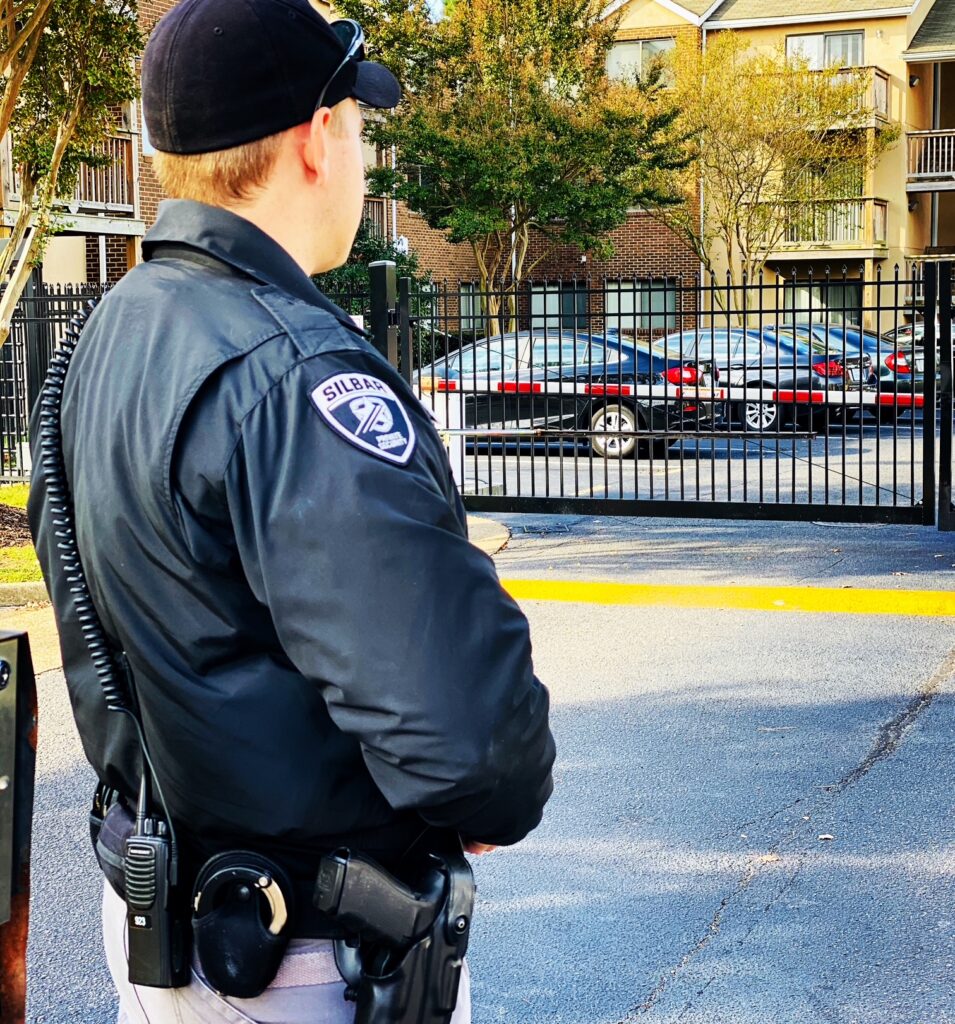
Most security franchises earn money from recurring services that clients need month after month. Silbar Security’s officers provide uniformed on-site protection and roving vehicle patrol across neighborhoods and larger properties. The company also staffs security for large public events and private gatherings.
Why Consider a Security Franchise in 2026?
Demand for security services is steady and essential. People and businesses need protection in strong economies and weak ones. As a result, the work doesn’t follow seasonal swings as some industries do.
The numbers show a large, stable workforce. According to the national security workforce tracked by the Bureau of Labor Statistics, “Security guards held about 1.3 million jobs in 2024.” The same agency projected that “about 162,300 openings for security guards and gambling surveillance officers are projected each year, on average, over the decade.”
Most of that hiring replaces workers who leave the field rather than adding new positions. In plain terms, the demand is consistent and replacement-driven, not explosive. That steadiness is part of the appeal for owners who want reliable, recurring work.
The market itself is sizable. IBISWorld calls it roughly a $50 billion market and reports, “The market size of the Security Services in the US is $50.4bn in 2026.”
The wider picture also counts security technology and systems, not guard services alone. Grand View Research covers this broader U.S. security market and reports, “The U.S. security market generated a revenue of USD 40,856.1 million in 2025 and is expected to reach USD 64,138.0 million by 2033.”
For franchise owners, the draw is monthly recurring revenue. Contracts for patrol and guarding renew month after month, which can build a predictable income base.
How Much Does a Security Franchise Cost?
Costs vary by brand, but Silbar Security publishes exact figures in its Franchise Disclosure Document (FDD). We will use those as a concrete example.
The total initial investment to begin operation runs from $92,000 to $215,900. That range covers the franchise fee and equipment, plus enough working capital to operate until revenue stabilizes.
The franchise fee itself starts at $50,000. Silbar sets it as the greater of $50,000 or $0.10 per person in your territory, so a typical fee lands between $50,000 and $100,000. After you open, you pay ongoing fees based on your gross revenue. A 5% royalty fee is typically industry standard, but more details may be found in the FDD.
You also need to meet financial thresholds before you qualify, which we cover next. For the full picture, review Silbar’s franchise investment and fees.
What Does It Take to Qualify and Start the Franchise?
Most franchisors set financial and background requirements. For Silbar Security, you need:
- A net worth of at least $100,000 and $60,000 in liquid capital
- The ability to pass a background and credit check
- To qualify for security licensing in your state
- The ability to obtain financing if you need it
These checks help protect both you and the brand. Prior security experience is not strictly necessary. Silbar provides initial training, so owners can come from many backgrounds. People with law enforcement or military backgrounds often adapt quickly. Experienced managers do too, because they already know how to lead teams.
Getting started starts with proper training. New Silbar Security owners attend about five days of instruction at Silbar Academy in Chesapeake, Virginia. The company covers air travel for up to two people and one hotel room during that training.
Franchise vs. Starting Your Own Security Company
Both paths can work. The right choice depends on how much you want built for you versus how much you want to build yourself.
| Factor | Security Franchise | Independent Company |
| Brand | Established name from day one | Build recognition yourself |
| Systems | Proven procedures provided | Create your own |
| Training | Structured onboarding | Self-directed |
| Purchasing | National purchasing power | Negotiate on your own |
| Support | Corporate teams available | You handle everything |
| Fees | Franchise fee and royalties | No franchise fees |
| Control | Follow the system | Full control |
These are characteristics of each model, not guarantees of results. A franchise gives you a brand and systems, but you still pay fees and follow the franchisor’s rules. An independent company gives you full control, though you build every system yourself and carry more risk early on.
What to Look For in a Security Franchise
When you compare security franchises, a few criteria matter most. Use these points to judge any brand you consider.
Start with territory. Look for a protected area large enough to support growth. Silbar assigns territories of about 500,000 population, though they are not exclusive.
Next, weigh support and training. Strong franchisors provide real onboarding and steady help, so review the depth of franchisee training and support before you sign.
Technology and equipment matter too. Ask what vehicles and software come with the system, because better equipment helps you win and keep clients. Also study the service mix, and favor services that clients renew monthly, such as patrol and guarding contracts.
Finally, read the FDD. The Franchise Disclosure Document lists the fees and other financial obligations. Read it closely and ask questions before you commit.
What Makes a Law Enforcement Based Model Different
Some security franchises are built on a law enforcement foundation. Silbar Security uses this approach and describes it as “Developed and Founded by Law Enforcement.” You can read more about its law enforcement based model.
The founders bring law enforcement standards to daily operations. That shapes officers’ training and how procedures work, which aims to raise the quality clients receive.
Equipment reflects the same standard. Owners run police-grade vehicles and equipment, and officers wear body-worn cameras. This visible, professional presence can deter crime and give clients confidence.
Support runs around the clock. Silbar Security’s 24/7 National Operations Command Center handles emergency dispatch and national communications. That means an owner in the field has backup at any hour, so they can focus on serving clients.
Evaluating Demand in Your Local Market
National data sets the backdrop, but your decision is local. Before you invest, study the market inside your future territory.
Look at population and growth first. A larger population and new commercial or residential construction usually mean more potential clients. Areas with frequent events also create demand for staffing.
Territory size shapes your ceiling. A larger protected territory gives you more room to sign clients before you reach its edges. Silbar’s territories of roughly 500,000 population give owners meaningful room to grow.
Local examples help you picture the fit. Silbar’s guide to investing in a security franchise in California shows how one owner can serve a specific regional market.
Choosing the Right Security Franchise
Choosing a security franchise comes down to a few clear steps. Confirm that demand in your market is steady and that you understand the full cost. Then make sure you meet the qualifications.
After that, pick a franchisor with genuine support and a model you can defend against competitors. A law enforcement based system like Silbar Security’s police-grade equipment and 24/7 command center support that many brands cannot match.
When you are ready, the next step is a simple conversation. You can talk with our franchise team for a no-obligation discussion about whether this franchise offering fits your goals.
Frequently Asked Questions
Are security businesses profitable?
Security businesses can be profitable because many services bill monthly and renew, which builds recurring revenue. Your actual results depend on your local market and how well you manage contracts and operations.
How much does it cost to start a security franchise?
With Silbar Security, the total initial investment runs from $92,000 to $215,900. This includes a franchise fee that starts at $50,000. Your final cost depends on your territory and local startup expenses.
Do I need experience to own a security franchise?
You do not need prior security experience. Franchisors like Silbar Security provide initial training at programs such as Silbar Academy. A background in law enforcement or business management can still help.
Can I start my own security agency instead?
Yes, you can build an independent security company. But you would create your own brand and systems without a franchisor’s help. A franchise trades some of that independence for a tested model.
Are there discounts for veterans or law enforcement?
Yes. Silbar Security offers 10% off the initial franchise fee for active duty U.S. military, U.S. veterans, and active duty or retired law enforcement officers.