
Picture a Chicago business owner who arrives before dawn to a shattered front door. She calls the police, then waits. Officers are covering calls across a busy district, so a report can take time.
That gap between a break-in and a response is where private security earns its keep. A patrol car that drives the block and a uniformed officer who checks the lot can calm a worried business owner.
For an entrepreneur, that same gap is an opening. If you want to invest in a security franchise in Chicago, this guide shows what the model is and what it costs. It also covers why local demand holds steady and how to check a franchisor before you sign.
Key Takeaways
- Investing in a Silbar Security franchise in Chicago takes about $142,000 to $275,000 total, including a $50,000 franchise fee (per Silbar’s FDD).
- Owners earn recurring monthly revenue from roving vehicle patrol and uniformed officers, plus event staffing, across a protected territory of roughly 500,000 people.
- Illinois employed about 51,340 security guards as of May 2023, and private security demand stays steady from ongoing replacement hiring.
- Silbar is Developed and Founded by Law Enforcement®, with police-grade vehicles and body-worn cameras, backed by a 24/7 National Operations Command Center.
- Federal law gives you at least 14 calendar days to review the Franchise Disclosure Document, which must contain 23 specific items of information.
- Military members and law enforcement officers, active or retired, qualify for a 10% discount on the franchise fee.
What It Means to Invest in a Security Franchise in Chicago
To own a security franchise in Chicago, you pick a franchisor and meet its financial qualifications. That includes a careful review of its Franchise Disclosure Document (FDD) and available local territory. With Silbar Security, the total initial investment ranges from $142,000 to $275,000, per Silbar Security’s FDD.
Buyers usually see two kinds of security franchises. One sells alarm and camera systems, and the other puts patrols and officers on the ground.
The Silbar security franchise opportunity is in the second group, built around roving patrol and uniformed officers, with on-site event coverage. That focus, rooted in law enforcement, sets it apart from hospitality-styled patrol brands and systems-only integrators.
Why Franchising?
Franchising itself is on solid footing. The IFA 2026 Franchising Economic Outlook projects franchise output rising to $921.4 billion, with about 845,000 establishments and nearly 8.9 million jobs in 2026. Beyond the economic success of franchise businesses, deciding to join a franchise offers several benefits. A security franchise lets you run your own security company using a parent brand’s name and proven system, with training included. You get a tested playbook instead of building one alone. That head start is one of the main benefits of franchise ownership in the security industry.
Why Chicago Is a Strong Market for Security Services
Security spending in the United States is large and steady. The U.S. security services industry had a market size of about $49.1 billion in 2025, according to IBISWorld (NAICS 56161).
Chicago is in one of the country’s bigger security labor markets. According to BLS security guard data in Illinois, the state employed about 51,340 security guards as of May 2023. Its location quotient of 1.08 is above the national average.
This demand is steady rather than a boom. The BLS Occupational Outlook Handbook projects about 157,200 openings for security guards and gambling surveillance officers each year from 2025 to 2035, on average. Most of those openings replace workers who leave.
For a Chicago owner, steady demand favors a visible model. Clients in busy metros want security they can see every night, and that visibility is what many local accounts pay for. “A marked patrol car does that work before a problem starts,” says Tanner Mintier, Director of Operations at Silbar Security.
How Much It Costs to Invest in a Security Franchise in Chicago
Silbar’s FDD lists a total initial investment of $142,000 to $275,000. That figure covers your startup costs to open and run the business in the early months.
The initial franchise fee is $50,000, per Silbar’s FDD, with a typical range of $50,000 to $100,000 tied to territory size. Ongoing fees are a 5% royalty on monthly gross revenue, plus a 1% system advertising fee and a 1% technology fee. Silbar’s FDD also sets a $250 per month local advertising minimum.
Silbar’s franchise qualifications call for about $100,000 in net worth and about $60,000 in liquid capital. Military members and law enforcement officers, active or retired, receive a 10% discount on the franchise fee. If you need funding, review the franchise financing options, which can include in-house support and outside lending such as SBA-backed loans.
Revenue Streams and Protected Territory
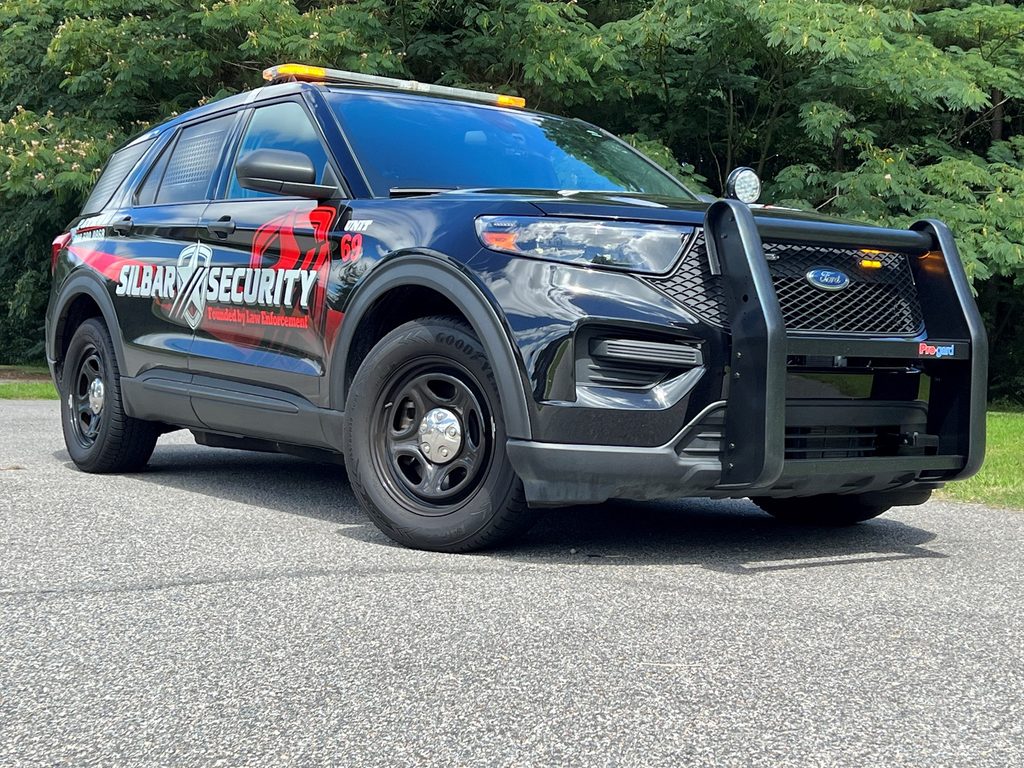
Owners earn recurring monthly revenue from service contracts. The flagship vehicle patrol service sends marked cars through client properties on a set schedule, while uniformed officers and event staffing add more billable work.
Each Silbar franchise comes with a protected territory of about 500,000 people, per Silbar’s FDD. That means room to sign accounts without another Silbar owner competing next door. You can also review available operating territories to see where units are open.
What Sets a Security Franchise Apart: Support, Training, and Technology
Silbar’s main difference is its foundation. The brand is Developed and Founded by Law Enforcement®, so its patrol standards and procedures come from people who did the work.
New owners start with Silbar Academy, an intensive program that covers operations and client service. You can see the scope of franchisee training and support before you commit.
“Our owners are not left to figure out dispatch on their own,” says Tanner Mintier, Director of Operations at Silbar Security. “The command center answers around the clock so a new franchisee can focus on clients.”
Behind each owner is the 24/7 National Operations Command Center in Chesapeake, Virginia, which handles emergency dispatch. Field teams use police-grade vehicles and body-worn cameras, supported by Silbar’s software.
Steps to Invest and Do Your Due Diligence
The path to ownership follows a clear order. You send an inquiry, have a conversation with the franchise team, review the FDD, attend a discovery day, sign, and launch.
The FDD is your main research tool. The FTC Franchise Rule requires franchisors to provide a disclosure document containing 23 specific items of information.
You also get time to read it. The amended Franchise Rule FAQs require the FDD at least 14 calendar days before you sign a binding agreement or make a payment.
Ask about territory boundaries and the fee structure, then dig into the Item 19 revenue figures. It also helps to check training support and Illinois security licensing, and you can start with Silbar’s published franchise FAQs. Before signing, have a franchise attorney read the agreement with you.
Frequently Asked Questions
How Much Does It Cost to Invest in a Security Franchise in Chicago?
Silbar’s Franchise Disclosure Document lists a total initial investment of $142,000 to $275,000, which includes a $50,000 franchise fee.
Do I Need Security or Law Enforcement Experience?
You do not need prior experience, though you must meet Illinois licensing rules, so many owners hire or partner with a licensed operator.
How Do Security Franchise Owners Make Money?
Owners earn recurring monthly revenue from patrol and officer contracts, plus event-staffing work, signed across their protected territory.
Are There Discounts for Veterans or Law Enforcement?
Yes, Silbar offers a 10% franchise-fee discount to U.S. military members and law enforcement officers, active or retired.
What Territories Are Available in the Chicago Area?
Silbar franchises come with a protected territory of about 500,000 people, so contact the franchise team to see current Chicago-area openings.
Start Your Path to Security Franchise Ownership in Chicago
Chicago’s demand for visible security is steady, and Silbar gives you a turnkey model with law-enforcement roots and clear numbers from its FDD. That combination lets you plan with fewer surprises.
When you are ready, request franchise information and schedule a no-obligation, pressure-free conversation with the Silbar Security franchise development team.